
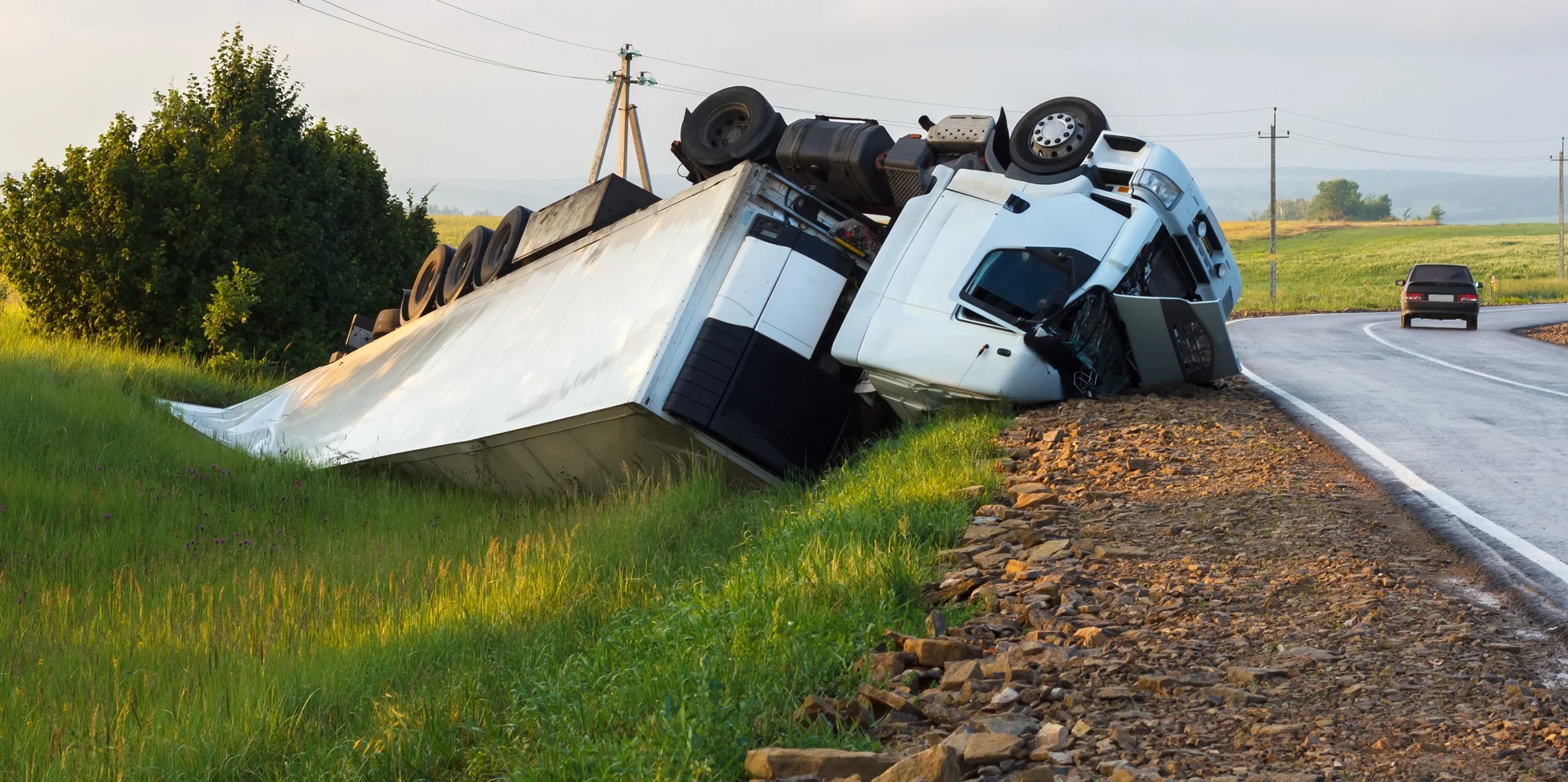
Monmouth County Truck Accident Attorneys
Case results
$3,500,000 FIRE FATALITY
$2,500,000 PEDESTRIAN ACCIDENT
$1,900,000 MOTOR VEHICLE ACCIDENT
$1,137,500 WRONGFUL DEATH
$750,000 AUTO FATALITY
$3,500,000 FIRE FATALITY
$2,500,000 PEDESTRIAN ACCIDENT
$1,900,000 MOTOR VEHICLE ACCIDENT
$1,137,500 WRONGFUL DEATH
$750,000 AUTO FATALITY
Truck Accidents
chamlin uliano & Walsh
Commercial trucks’ size and weight can significantly increase truck accidents and commercial vehicle collision outcomes.
A truck accident has the potential to transform your life in a single moment. Significant physical injuries, mounting healthcare costs, and the sudden loss of steady income create immediate emotional and financial strain while insurance carriers often focus on finding ways to lower their financial responsibility. Unlike a standard collision between two passenger cars, crashes involving commercial vehicles are governed by specific New Jersey and federal trucking regulations and frequently involve several different liable parties along with corporate legal teams that begin forming a defense strategy as soon as the crash is reported.
If you have sustained injuries in a collision with a commercial vehicle, you are not required to face large trucking corporations or their insurance providers without professional support. The Monmouth County truck accident lawyers at Chamlin, Uliano & Walsh have provided trusted legal representation in New Jersey for over 60 years. Our firm was established in 1960 and continues under two generations of leadership with over $100 million recovered for our clients. You can reach our office at (732) 229-3200 to discuss your situation during a consultation.
What To Do Right After a Truck Accident
Immediately following a truck crash is often chaotic and stressful, yet the actions you take during this time can have a lasting effect on your physical recovery and your future ability to seek a legal remedy. Taking specific steps helps ensure that important evidence is not lost and makes it harder for insurance adjusters to take advantage of the situation while you are vulnerable.
Get Medical Attention First
Contacting emergency services is the most important first step even if you believe your injuries are minor or if you do not feel pain right away. Certain types of trauma, such as internal organ damage or traumatic brain injuries, might not produce obvious symptoms until hours or days after the impact. Visiting a doctor or an emergency room creates a formal medical record that links your physical condition directly to the crash, which remains a vital component of any future legal claim.
Gather Evidence at the Scene
If you are physically able to do so without putting yourself in danger, you should use your phone to take photographs of all vehicles involved, the surrounding road conditions, any visible skid marks, and relevant traffic signals. Collecting the names and phone numbers of any individuals who witnessed the event is also beneficial, as is obtaining the identification of the truck driver along with the name of their employer and their insurance carrier. Trucking companies often dispatch their own investigators to a scene quickly, so having your own documentation is a significant advantage.
Be Cautious When Dealing with Insurance Adjusters
It is common for insurance representatives to reach out to injured individuals shortly after an accident to ask questions or present an initial settlement offer. Anything you say during these recorded conversations can be interpreted in a way that minimizes your claim or leads to a total denial of benefits. It is generally a better idea to decline providing a recorded statement and to consult with a legal professional before you engage in detailed discussions with the insurer representing the trucking company.
Get a Copy of the Official Police Report
A police report contains objective details about the incident, including statements from the drivers, observations from witnesses, and any traffic citations that the responding officer issued at the scene. This document serves as a foundational piece of evidence that helps establish the facts of the case during the claims process.
Speak with a Truck Accident Lawyer
Once you sign a settlement agreement and accept payment, you lose the right to pursue any further compensation for that specific accident. Trucking entities frequently propose low initial settlements that fail to account for the long-term costs of physical therapy, future lost wages, or ongoing medical needs. A lawyer can evaluate the total impact the crash has had on your life and engage in negotiations to ensure the final amount covers your current bills and any future financial burdens.
Commercial Truck Accidents Versus Car Crash Cases
Accidents involving large commercial trucks carry much higher stakes and involve a more intricate legal process than typical passenger vehicle accidents. The massive size and weight of these vehicles increase the intensity of the impact, and the fact that several different companies might be involved in the operation of a single truck makes determining who is responsible a much more difficult task.
Catastrophic Injuries and Higher Medical Expenses
A loaded semi-truck can weigh as much as 80,000 pounds, which results in a collision force that is far more devastating than a crash between two small cars. Individuals involved in these accidents often suffer from spinal cord damage, head trauma, multiple fractures, or internal injuries that require surgery and long-term hospitalization. The process of getting better can take several years and some victims find themselves experiencing permanent physical limitations. These high medical costs combined with the inability to work put an immense amount of pressure on families.
How Trucking Companies Limit Financial Liability
Trucking corporations and the companies that insure them are proactive in protecting their interests from the moment a crash occurs. They may have representatives arrive at the scene to interview witnesses and secure data that supports their defense. During the process, they might also engage in the following behaviors:
- Proposing quick financial settlements before a victim understands the full scope of their medical needs
- Creating delays in the claims process to make victims feel more desperate for any amount of money
- Claiming that the person in the passenger vehicle was actually the one who caused the accident
Without a legal representative who understands these tactics, an injured person runs the risk of agreeing to a payout that leaves them struggling to pay for their future care and daily living expenses.
Identifying Multiple Responsible Parties
In a standard car accident, the focus is usually on the two drivers, but a truck accident claim often extends to several different entities. While the truck driver may have made a mistake, the company that hired them, the team that loaded the trailer, the shop that performed maintenance, or even the manufacturer of a faulty part could be held liable. Because each of these entities typically carries its own insurance policy, the litigation process becomes much more layered. Our legal team investigates every possible source of recovery to ensure that all parties who contributed to the accident are held accountable.
Determining If You Have a Truck Accident Case
A lawsuit is not the outcome of every collision, but you may have the right to seek damages if the crash was the result of another party failing to act with reasonable care. This failure is known as negligence, and proving it is the central requirement for a successful recovery in New Jersey.
Establishing Negligence in Trucking Cases
To move forward with a claim, you must demonstrate that the reckless or careless behavior of another person or company caused the crash. In the context of the trucking industry, this often involves:
- Errors made by the driver such as exceeding the speed limit, looking at a phone, or driving while overly tired.
- Violations committed by the trucking company like failing to check a driver’s background or neglecting to fix known mechanical issues.
- Mistakes made during the loading process where unsecured freight shifts during a turn and causes the driver to lose control.
- Failure of equipment such as brakes that do not engage or tires that blow out because they were not replaced when worn.
When the evidence indicates that the accident happened because of these types of failures, a valid legal case generally exists.
Accidents Involving Out-of-State Drivers or Companies
Because Monmouth County is a hub for transportation and commerce, many trucks passing through are registered in other states and driven by people who do not live in New Jersey. If the collision occurs on a New Jersey roadway, the laws of this state will apply to the legal proceedings. Trucking operations that move goods across state lines must follow both federal safety standards and the specific rules of the states where they operate. Our attorneys have spent decades experiencing the intersection of these different regulations and know how to apply them to your benefit.
How New Jersey Comparative Negligence Laws Affect Your Recovery
New Jersey utilizes a system known as comparative negligence, which means that your final compensation can be adjusted based on your own level of responsibility for the crash. If it is determined that you were more than 50% at fault for the incident, the law prevents you from recovering any damages from the other parties. If you are found to be partially at fault but 50% or less, your award is simply reduced by that percentage. For instance, if a jury decides your total damages are $200,000 but finds you 10% responsible, you would receive $180,000. Insurance companies often try to exaggerate a victim’s role in a crash to save money, so we work to present evidence that places the responsibility where it truly belongs.
Types of Compensation That Can Be Recovered
The physical and financial aftermath of a truck accident is often overwhelming. The legal system allows you to pursue compensation for both your tangible financial losses and the personal toll the accident has taken on your quality of life.
Economic Damages
These are the clear financial costs that result from the accident. We work to recover funds for the following:
- Medical bills including the cost of the initial ambulance ride, surgery, medication, and future physical therapy sessions.
- Lost wages to replace the income you could not earn while you were stuck in the hospital or recovering at home.
- Loss of future earning capacity if your injuries are severe enough that you can no longer perform the same job or work full-time.
- The cost to repair your vehicle or the fair market value of the car if it was a total loss.
Non-Economic Damages
These address the intangible ways your life has changed. You may be eligible for compensation related to:
- The physical pain and daily discomfort you endure because of your injuries.
- The mental health impact such as experiencing anxiety, sleep disturbances, or post-traumatic stress.
- The loss of guidance or companionship that occurs when a family member is killed in a fatal truck accident.
How Much Is a Truck Accident Case Worth?
There is no set amount for what a case is worth because the value depends on the specific facts of the collision, the severity of the medical trauma, and the amount of insurance coverage available. To build a strong argument for a specific dollar amount, our firm utilizes medical documentation, payroll records, and expert opinions to show the full scope of how the accident has impacted your life. Each situation is unique, and we focus on negotiating for a figure that genuinely reflects your long-term needs.
Types of Trucking Accidents We Handle
Commercial vehicle crashes occur in various ways, and the specific mechanics of the accident often point toward who is at fault. Our firm handles a wide range of cases, including:
Collisions Involving Semi-Trucks and 18-Wheelers
Many accidents on New Jersey highways involve high speeds and drivers who fail to react in time to slowing traffic. We look at data from the truck’s internal computer, examine video from traffic cameras, and work with reconstruction experts to show exactly how the impact occurred.
Instability Accidents Such as Jackknifes and Rollovers
Specific types of crashes are unique to large trailers:
- Jackknife incidents occur when the trailer of the truck slides toward the cab, often sweeping across several lanes of traffic.
- Rollovers happen when a truck turns too sharply or hits an incline, causing the entire vehicle to flip onto its side.
- Underride collisions are among the most dangerous and occur when a smaller car slides underneath the rear or side of a trailer.
Incidents Involving Improperly Secured Cargo
If a trailer is overloaded or the weight is not distributed correctly, the truck becomes much harder to steer and stop. Cargo that falls off a truck can also cause multi-car pileups. We review loading manifests and weight station records to see if the company followed safety protocols.
Fatigued Driving and Safety Regulation Breaches
Federal law limits the number of hours a truck driver can spend behind the wheel without a break. When drivers feel pressured to meet deadlines, they may ignore these rules. We use electronic logs and GPS data to identify if a driver was operating while dangerously tired.
Wrongful Death Claims Following a Fatal Crash
When a truck accident results in the loss of a life, the surviving family members can pursue a claim for the financial and emotional support they have lost. We conduct an exhaustive investigation into the trucking company’s history and maintenance records to seek justice for the family.
Who is Responsible for a Commercial Vehicle Accident?
Liability is rarely a simple matter in the trucking industry. Because different companies are responsible for the driver, the vehicle, and the cargo, our team performs a detailed investigation to find every party that played a role in the crash.
The Individual Driver
Drivers are expected to follow the rules of the road, but many accidents are caused by speeding, using a mobile device, or driving under the influence of drugs or alcohol. Drivers who stay on the road too long in violation of federal hours-of-service laws also create a significant risk for everyone else on the road.
The Trucking Company
Companies have a legal obligation to vet the people they hire and to ensure their fleet is safe to operate. If a company encourages its drivers to speed to meet a deadline or hires someone with a dangerous driving record, that company can be held directly responsible for the resulting crash.
Third-Party Loading Companies
If a separate company was responsible for packing the trailer and they did so in a way that caused the load to shift, they may be liable for the accident. Overloading a truck makes it nearly impossible for a driver to stop quickly in an emergency.
Maintenance Shops and Equipment Manufacturers
A mechanical failure like a brake blowout can lead to a disaster. If a repair shop failed to identify a problem during a routine inspection or if a part was manufactured with a defect, those entities can be brought into the legal claim.
Government Agencies
In some instances, the design of a road or the failure to maintain a safe construction zone contributes to a crash. If a malfunctioning traffic light or a massive pothole caused the truck to lose control, a government agency might be responsible for the damages.
Defense Strategies Used by the Trucking Industry
Trucking companies and their insurers are often working on a defense before the injured person has even left the hospital. Their primary goal is to protect their profits by paying out as little as possible.
Controlling the Narrative Early
By sending investigators to the scene immediately, trucking companies try to gather evidence that favors their version of what happened. They may try to get statements from witnesses before those individuals have had time to process the events clearly.
Offering Fast, Inadequate Settlements
Insurance adjusters know that you are likely worried about your bills. They may offer a check very quickly, hoping you will sign away your rights before you realize that you need surgery or that you won’t be able to return to work for several months.
Attempting to Shift the Blame
Adjusters will look for any reason to say that you were the one who caused the accident. They might claim you were in the truck’s blind spot or that you stopped too suddenly. Under New Jersey law, every percentage of fault they can push onto you is money they get to keep.
Creating Unnecessary Delays
Sometimes an insurance company will simply stop returning calls or ask for the same documents over and over again. They do this to wear you down so that you become more likely to accept a low offer just to end the process.
Potential for Evidence to Disappear
Trucking companies hold the keys to the most important evidence, such as the black box data and the driver’s logbooks. If this evidence is not legally protected quickly, it can be overwritten or lost. Our firm takes immediate action to ensure that all relevant records are preserved.
The Role of Specialized Evidence in Your Case
Proving what happened in a truck accident requires more than just a personal account of the event. We look for specific data points that provide an objective look at the moments leading up to the impact.
- Black box data provides a record of how fast the truck was going and exactly when the driver applied the brakes.
- Electronic logging devices show whether the driver had been on the road for more than the legal limit of hours.
- Dashcam and surveillance footage from nearby businesses can offer a visual record of the collision.
- Maintenance logs reveal if the truck had been properly serviced or if the company was ignoring mechanical problems.
By securing this information, we can counter the arguments made by the trucking company and build a case based on hard facts.
How Chamlin, Uliano & Walsh Build a Strong Legal Claim
A successful outcome is the result of careful preparation and a commitment to investigating every detail of the accident.
Conducting a Complete Investigation
We start by obtaining the police reports and securing all available data from the trucking company. We look for signs of driver fatigue, speeding, or equipment failure that the company might be trying to hide.
Partnering with Experts
Trucking cases often require specialized knowledge. We work with accident reconstructionists who can explain how the physics of the crash prove who was at fault. We also consult with medical professionals to explain the long-term impact of your injuries and vocational experts to calculate how much income you will lose over your lifetime.
Holding All Parties Accountable
We do not just look at the driver; we look at the entire chain of command. By reviewing employment records and company policies, we can determine if the trucking company’s culture of cutting corners led to your injuries.
Demanding Fair Treatment from Insurers
If the insurance company tries to offer an amount that is insulting, we present them with the evidence we have gathered. We make it clear that we are prepared to take the case to a jury if they are not willing to provide a settlement that covers the full extent of your losses.
Taking the Case to Trial
While many cases are resolved through negotiation, some companies refuse to do the right thing. Because our firm has been around since 1960, we have the resources and the experience to litigate these cases in court. A trucking company is much more likely to offer a fair settlement when they know the lawyers on the other side are ready for a trial.
Time Limits for Filing a Truck Accident Claim in New Jersey
There is a specific window of time in which you must file a lawsuit or you will lose your right to seek compensation forever.
The Two-Year Statute of Limitations
In New Jersey, the standard time limit for a personal injury lawsuit is two years from the date the accident occurred. If you are filing a wrongful death claim, the deadline is generally two years from the date of the person’s passing.
Consequences of Waiting Too Long
If you attempt to file a claim after the two-year window has closed, the court will almost certainly dismiss your case. Additionally, insurance companies will not engage in settlement talks if they know you no longer have the legal right to sue them.
Specific Exceptions and Shorter Deadlines
If the truck involved was owned by a government agency or a municipality, you may be required to file a formal notice of claim within a matter of months. Because these deadlines can be complicated, it is best to speak with a lawyer as soon as possible after the accident.
Get Help With Our Truck Accident Attorneys Today
A truck accident claim is about more than just money; it is about ensuring that you have the medical care and financial stability you need to move forward with your life. Our attorneys have the local experience and the professional resources to stand up to the largest trucking fleets and their insurance carriers.
Contact the team at Chamlin, Uliano & Walsh by calling (732) 229-3200 to schedule a consultation regarding your Monmouth County truck accident case.